Xackoy (Khach): Armenian History and Alevi Memory in Tercan (Historic Derjan), Erzincan Province
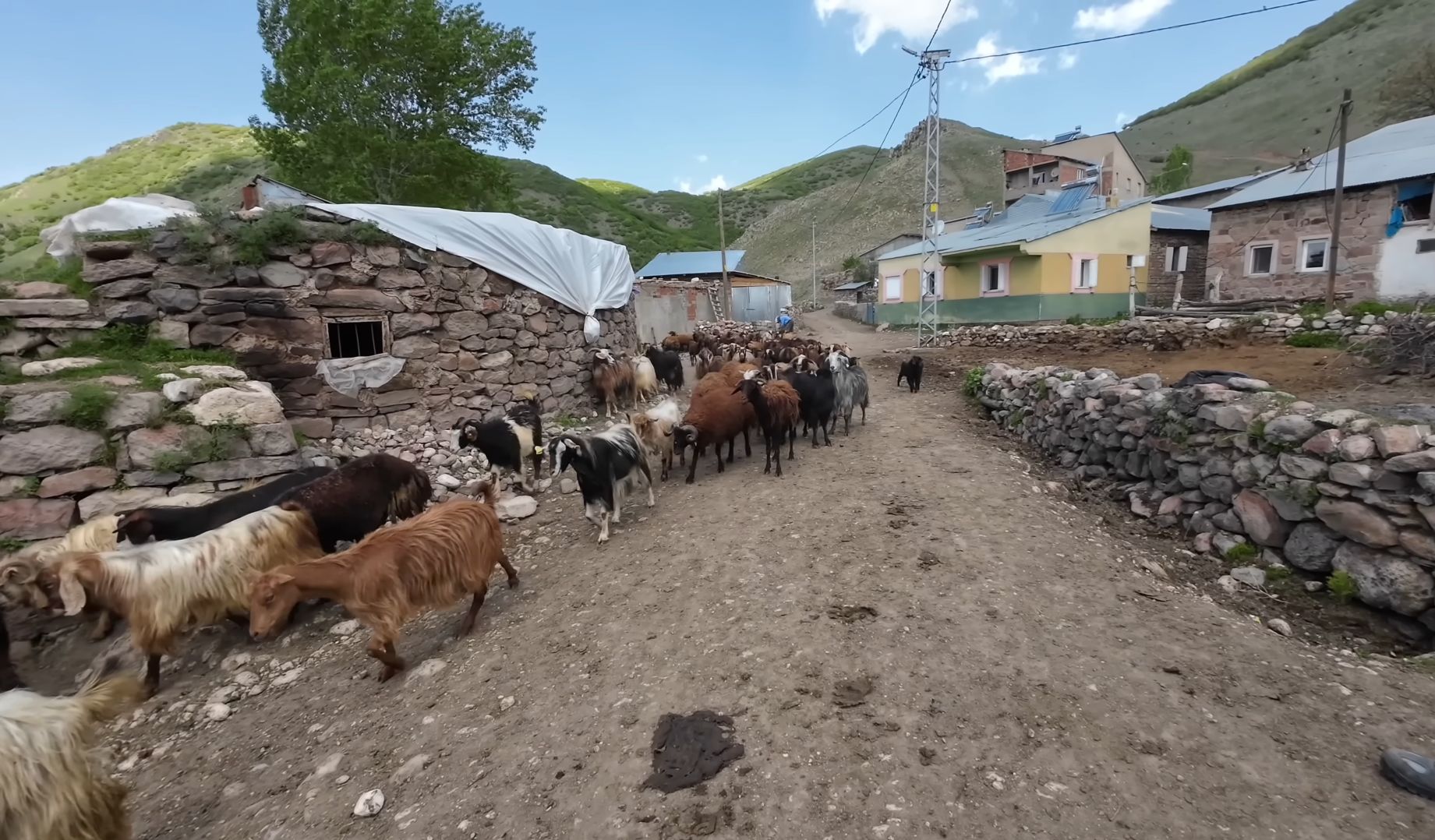
Recently, a man from Xackoy (Khach, Armenian for “Cross”) in the Tercan district of Erzincan contacted me with a story about his parents’ village. “My parents’ village used to be an Armenian and Alevi village in Erzincan, Tercan, and they lived together.” He added, “Unfortunately, there is not a single Armenian left in the village today.”
Over the past year and a half, I have received similar messages from people in Turkey. They tell me memories of former Armenian neighbors, stories passed down through families, and ask questions about villages whose earlier histories have largely disappeared from public view. I find these conversations, and the people who share them, significant.
Today, the village is officially known as Başbudak, but according to the man who contacted me, locals still call it Xackoy. The earliest written account I found dates to the eleventh century. The Armenian historian Aristakes Lastivertsi, writing between 1072 and 1079, mentions a settlement called Bazmaghbyour, meaning “Many Fountains,” in the historical district of Mananaghi. A prominent cross stood there, and over time the settlement came to be known as Khach, “Cross.”
-lh4F2PlB2kODxyL46ZyviwXzu10eJO.png)
According to Aristakes, this change of name was connected to conflict over the Tondrakian movement, a medieval Armenian Christian dissenting movement that challenged the established Church and some of its practices. Since most surviving accounts of the Tondrakians were written by their opponents, historians treat descriptions of their beliefs cautiously. Aristakes recounts that Tondrakians attacked the cross at Bazmaghbyour during the night. When its destruction was discovered the following morning, Patriarch Samuel arrived with clergy and a crowd and arrested six accused dissenters. The episode was followed by a violent campaign against the Tondrakians. Over time, the village became increasingly associated with the episode and came to be known as Khach. Whatever the exact circumstances, the account is important because it places the settlement firmly within the religious and political world of medieval Armenia.
The name endured for centuries. An Armenian geography published in 1806 refers to the settlement as “Bazmaghbyour or Khach Avan.” In Armenian, Khach Avan means “Village of the Cross.” The local form used today (Xackoy) retains the Armenian khach (“cross”) but joins it to Turkish köy (“village”). It is therefore a hybrid form with the same meaning as Khach Avan. This may reflect a shift toward Turkish in local speech while preserving the older Armenian place-name. It may also raise questions about possible Crypto-Armenian continuity.
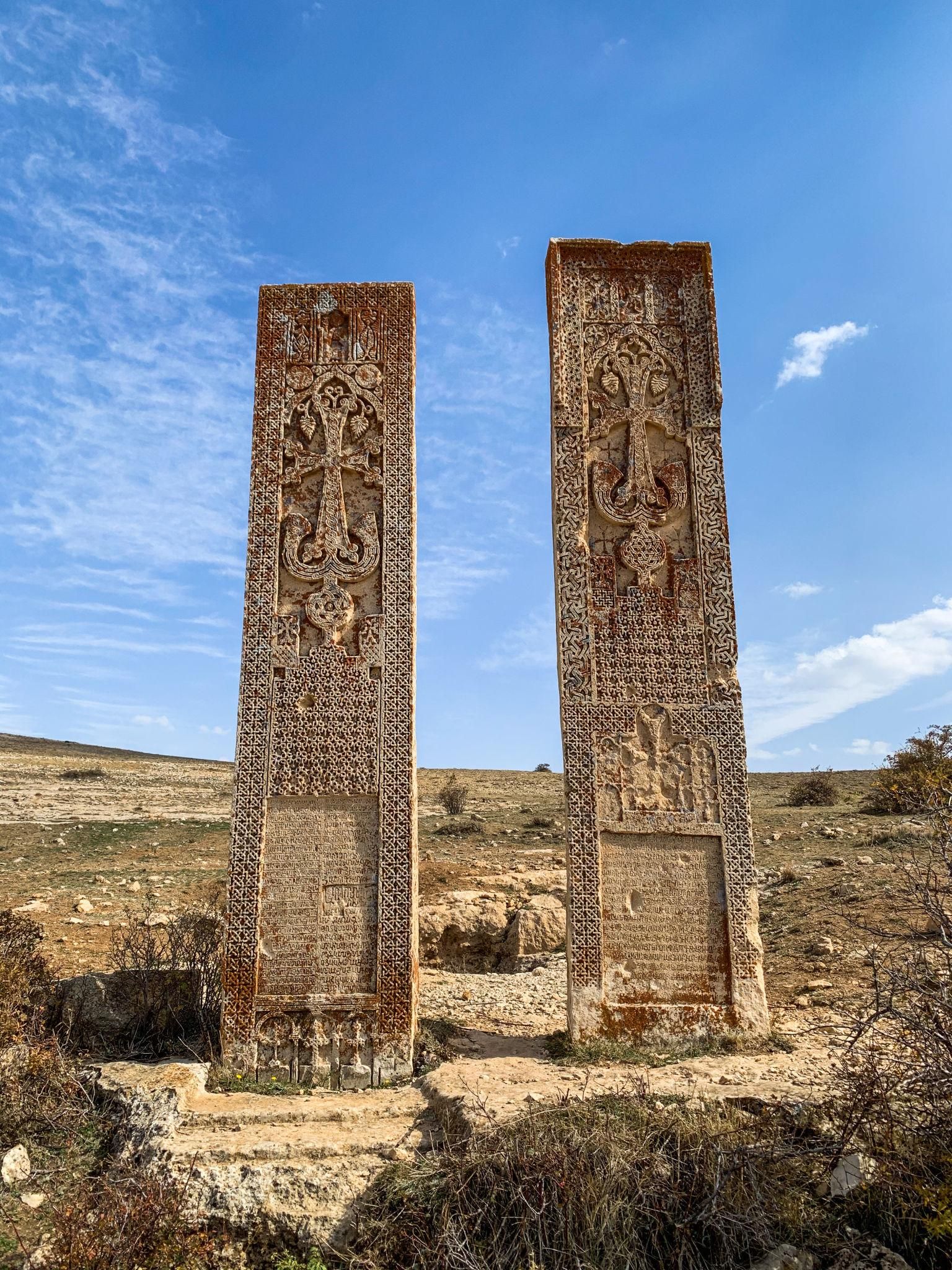
The village had two churches: Surp Minas, also identified as Surp Poghos-Petros, and Surp Hovhannes. Xackoy also had a school, while the ruins of a Surp Khach monastery stood nearby. These institutions suggest a settled Armenian communal life that continued to shape the village well into the modern period. The wider region came under Ottoman rule in 1514. An 1835 census counted 6,720 males across the Tercan district, including 2,237 non-Muslims classified by religious tax status. The census counted only males, covered the entire district, and was not an ethnic Armenian count for Xackoy itself. The nineteenth century brought further demographic change. After the Russo-Ottoman War of 1828–29, many Armenians and other Christian communities from Upper Derjan migrated to Russian-controlled territories, especially Tsalka in present-day Georgia. Even so, Derjan remained heavily Armenian. By 1914, estimates place the district’s Armenian population at around 17,000.
That community was largely destroyed during the Armenian Genocide. According to historian Raymond Kévorkian, on May 30–31, 1915, 11,690 Armenians from 41 villages in the Tercan/Mamahatun region were deported. Many men were killed locally or near Gotır Köprü (Goter Bridge), a site about 25 kilometers south of Tercan associated with killings along the Euphrates. Others were massacred in the Kemah gorges, the steep Karasu River gorge near Kemah. The town’s Armenian name was Ani-Kamakh. The gorge is known in Armenian as Kamakhi kirj (“Kamakh Gorge”). Around 85 percent of Derjan’s Armenians were killed, with roughly 2,500 survivors by 1917.
-9dBs4QvuTaFzpW1IoJLoBoQ3Cw85S7.jpg)
It is in this context that local memories from Xackoy become especially important. The man who contacted me remembers his father estimating that the village was “fifty-fifty Alawi and Armenians.” Local Alevi accounts similarly preserve memories of families from Inner Dersim, Armenian gravestones, and a Meryem Ana shrine visited by Alevis. These oral histories offer a village-scale perspective that official censuses cannot provide. They also preserve details that may never have entered formal records at all: who lived beside whom, which sacred places were shared, and how people remembered the village after its Armenian community disappeared. At the same time, exact household numbers, family names, and migration routes remain uncertain.
The man ended his message with, “Diversity is a big power.” I agreed.
He then added, “It’s a shame we couldn’t manage to live together in peace and harmony.” Again, I agreed.
He asked, “Where did those families go, and what became of their descendants?” I did not have an exact answer.
If your family was from Khach, please reach out.
About the author
Comments are reviewed by the editorial team before publication. Spam, abuse, and unverified private information will not be published.